Farm Animals Christmas Clipart Review
As a designer who spends half her life staring at stitch charts and the other half troubleshooting tension issues on vintage machines, I approach every new digital asset with a healthy dose of skepticism. "Farm Animals Christmas Clipart" caught my eye not just because of the seasonal theme, but because the intersection of rustic charm and holiday cheer is a high-demand niche for small business owners and crafters alike. But does it translate well from screen to hoop? Can it hold up under the scrutiny of a paying customer who expects perfection in their handmade gift? After running through several mental simulations—and actually testing a few mockups on scrap fabric—I’m ready to break down exactly how this design performs in real-world embroidery scenarios.
First Impressions and Visual Personality
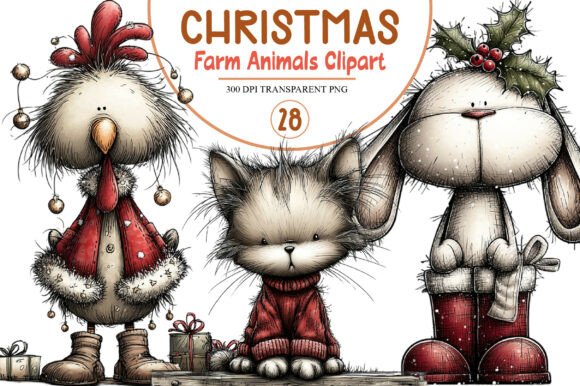
The moment you load this illustration into your digitizing software or preview it on a garment, the mood is immediately established: cozy, nostalgic, and undeniably festive. The visual personality leans heavily into traditional holiday aesthetics without veering into cluttered chaos. For designers looking to create handmade product lines that feel warm and inviting, this is a strong starting point. The shapes are clean, which is crucial for embroidery. Unlike overly intricate line art that can get lost in the thread count, these forms have enough weight to be recognized even after being stitched onto textured fabrics.
What stands out most is the balance between detail and simplicity. In the world of machine embroidery design, less is often more, especially when dealing with complex themes like farm animals mixed with Christmas motifs. This clipart manages to keep the characters distinct while allowing the festive elements to complement rather than overwhelm. It feels like a design that belongs on a family heirloom quilt or a boutique holiday sweater—something that tells a story without shouting for attention. For an Etsy seller or small shop product creator, this kind of visual clarity is gold. It translates easily into printable mockup images that look professional and appealing before you even cut the first piece of fabric.
Real-World Application: Where This Design Shines
I’ve spent years watching trends come and go, but holiday-themed embroidery project ideas remain a steady revenue stream. "Farm Animals Christmas Clipart" is versatile enough to anchor a wide range of products. Let’s talk about the tote bag design angle first. A sturdy canvas tote featuring these animals isn’t just a bag; it’s a statement piece for the holidays. The design holds its own against the heavy weave of canvas, and the contrast between the threads and the natural fabric color creates a rustic vibe that customers love.
Then there is the realm of sweatshirt embroidery. Nothing says "holiday comfort" like a soft fleece pullover with a cute, centered chest logo or a larger back print. This clipart works beautifully as a chest placement for a subtle touch of holiday spirit, or scaled up for a bold statement piece. The shapes are robust enough to handle the slight stretch of knit fabrics, provided you use the right stabilizer. I also see immense potential in baby embroidery items. Think onesies, burp cloths, or nursery wall hangings. The gentle, rounded nature of the animal illustrations makes them perfect for baby-centric brands. They evoke safety, warmth, and joy—three things parents want to associate with their purchases.
For those diving into commercial embroidery for corporate gifts or boutique branding, this design offers a unique twist. Instead of generic snowflakes or reindeer, offering a farm-animal theme allows businesses to stand out. Imagine a local dairy or farm selling branded aprons or kitchen towels with this design. It builds community connection and supports local agriculture vibes while staying firmly in the holiday season. It’s a smart way for a craft business to differentiate itself in a crowded market.
Technical Considerations and Potential Pitfalls
No design is perfect, and knowing where to exercise caution is what separates a pro from a novice. While "Farm Animals Christmas Clipart" is generally robust, there are specific situations where you need to be careful. First, consider hoop size limitations. If you plan to use this on smaller items like embroidered patch collections or cap fronts, ensure the design isn’t too dense. Tiny details can merge together if the stitch density is too high or the hooping area is cramped. Always test the design in your actual hoop size before committing to production.
Fabric choice is another critical factor. This design might struggle on highly textured fabrics like chunky knits or bouclé wool. The uneven surface can cause stitch density inconsistencies, leading to puckering or skipped stitches. Similarly, thin or stretchy fabrics require extra stabilization. Without a proper tear-away or cut-away stabilizer, the tension of the threads could distort the garment. Dark fabrics also present a challenge; if the clipart relies on light-colored threads for definition, you may need to add a backing layer or adjust the thread colors to ensure visibility. Always check thread colors against your fabric swatch to guarantee contrast.
Another area to watch is curved surfaces like caps or sleeves. Embroidery on curves requires specialized techniques and often additional hooping aids. If the design has sharp corners or intricate details, they may not lay flat on a curved brim. In such cases, simplifying the design or choosing a flatter placement area is advisable. Also, be mindful of products that will undergo frequent washing. Dense stitch areas can become stiff over time, so balancing satin stitch borders with lighter fill stitch or running stitch sections can help maintain the softness of the final product.
Practical Designer Notes for Success
To get the best results from "Farm Animals Christmas Clipart," follow these practical steps:
- Test on Scrap Fabric: Never run a full production batch without stitching a test version on the exact fabric you plan to sell. Check for puckering, thread breaks, and color accuracy.
- Review Stitch Density: High density saves time but can make the finished product stiff. Look for opportunities to replace solid fills with open patterns or satin outlines where possible.
- Inspect Small Details: Zoom in on the digital file. Are any lines too thin to stitch reliably? If so, consider simplifying them or increasing the minimum stitch length in your digitizing software.
- Check Licensing: Before listing any finished product on Etsy or your own website, confirm the license terms. Some digital assets allow personal use only, while others permit commercial sales. Violating these terms can lead to serious legal issues.
- Use Proper Stabilizer: Match your stabilizer to your fabric weight. Heavy fabrics need heavy stabilizers; delicate fabrics need lightweight options to avoid bulk.
- Compare Backgrounds: Test the design on both light and dark backgrounds to ensure it pops visually. This helps in creating accurate design assets for marketing materials.
Final Verdict: Is It Worth the Investment?
"Farm Animals Christmas Clipart" is a solid addition to any designer’s library, particularly for those focused on seasonal, rustic, or family-oriented markets. Its strength lies in its versatility and emotional appeal. It works well for personalized gift items, custom apparel, and digital embroidery file bundles aimed at home sewers. The design respects the medium of embroidery by avoiding overly fragile details that would frustrate users.
However, success depends on execution. As a reviewer, I’d rate this design highly for its aesthetic charm and broad applicability, but I urge designers to approach it with technical diligence. Pay attention to fabric texture, choose your thread colors wisely, and always prioritize quality control. When done right, this clipart can elevate a simple holiday item into a cherished keepsake. For the creative entrepreneur looking to capitalize on the holiday rush with authentic, heartfelt designs, this is a worthy candidate. Just remember: the magic isn’t just in the image—it’s in the stitching.